· Ivelin Kozarev · Sales Training · 7 min read
What Should Sales Coaches Consider Before Buying an AI Role-Play Platform?
Before buying AI roleplay for your coaching business, decide how it fits your service, who owns your content, how clients stay separate, and what you will promise to measure.
Before buying an AI sales role-play platform, decide what your clients will practice, how you will coach them, and how the service will pay for the time it takes to run. Then check that the tool can support your methodology, keep client work separate, and meet your content and data requirements.
A platform can give your clients more chances to practice. It cannot decide what your coaching business should sell or what counts as good performance. Those decisions need to come first.
This guide is for independent sales coaches and training companies choosing a tool for client delivery. If you need a plain explanation of the role it can play, read what AI actually does for sales coaches.
What part of your service will AI roleplay support?
Start with a gap in an existing service. Perhaps clients leave a workshop with a clear idea of what to do, but little chance to try it. Perhaps you spend the first coaching session finding out which skills need work. Each gap calls for a different program.
| Your service | A useful role for AI practice | What you still need to deliver |
|---|---|---|
| A live workshop | Practice before the session to surface gaps, then another attempt after teaching. | Explain the skill, review patterns, and address mistakes the scores do not explain. |
| A course | Short exercises tied to a specific lesson. | Make the exercise match the lesson and help learners who get stuck. |
| Ongoing coaching | Practice between calls, with results informing the next session. | Review evidence, choose the next challenge, and connect practice to real work. |
| A bespoke client program | Scenarios based on that client’s buyers, objections, and sales process. | Gather context, get approval, keep content current, and report to the sponsor. |
Choose one use case first. Buying a broad platform before choosing a service often leaves the coach with more content to build and no clear reason for the client to use it.
Write your offer in one sentence: “Between our coaching sessions, learners will practice [skill] in [situation], and we will review [evidence] to decide [next action].” If that sentence is hard to finish, spend more time on the program design.
Can the platform teach your method without reducing it to keywords?
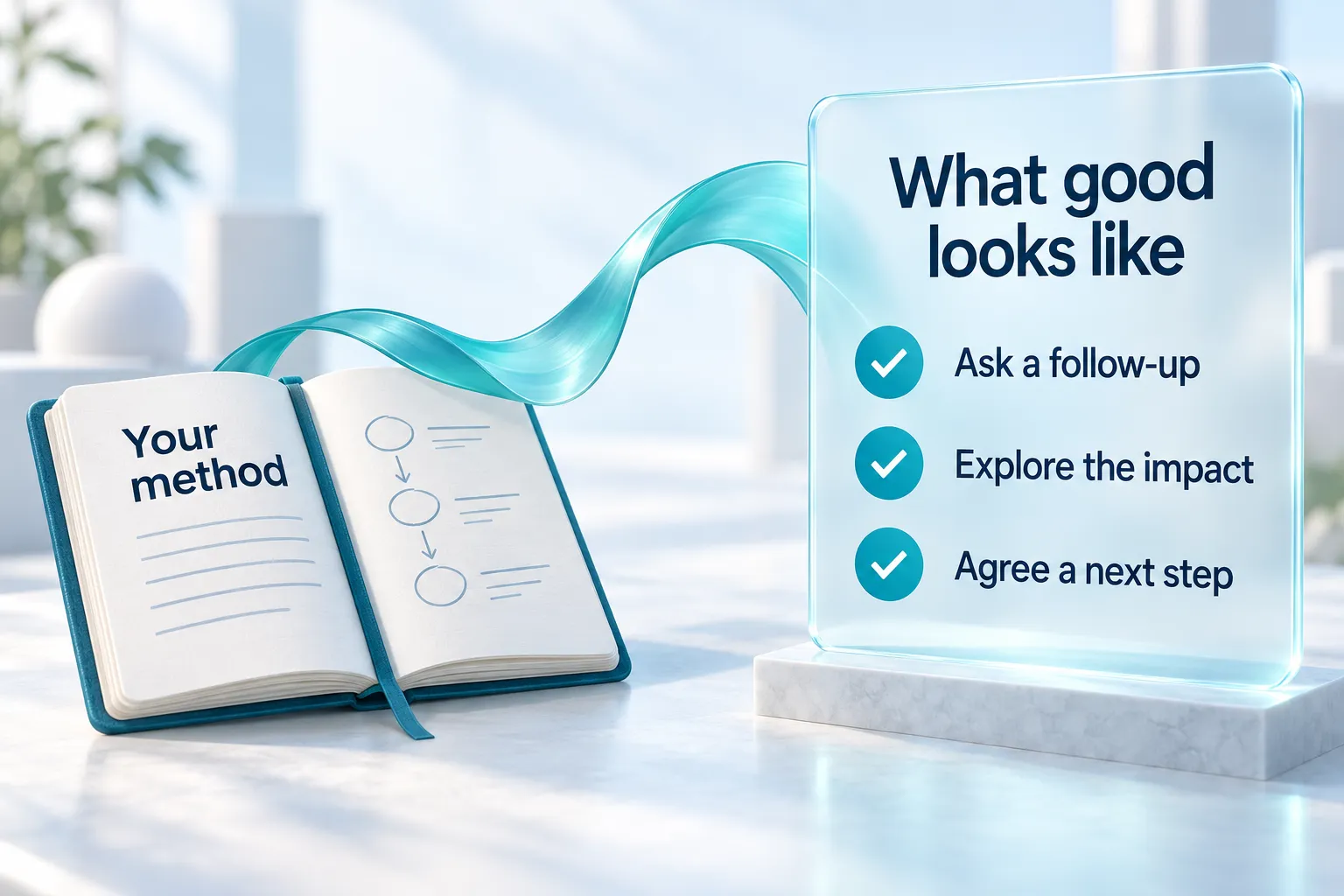
Your method is more than a set of phrases. A rep can ask “What keeps you up at night?” and still fail to explore a buyer’s problem.
Turn one part of your method into observable behavior. For example:
- The learner asks a follow-up question based on the buyer’s answer.
- They check the effect of the problem before proposing a solution.
- They agree on a next step with a purpose and an owner.
Then decide what poor, partial, and strong performance look like. You need a platform that lets you test those distinctions, not just upload a PDF and hope it understands your approach.
Ask who can change the rubric, how edits affect results, and how a coach can review a disputed score. Keep the method stable when comparing a learner’s progress. If you change the scoring rules, explain that change in your report.
What happens to your training content and your clients’ data?
Treat your own teaching material and client information as separate concerns.
For your methodology, review who owns the uploaded content, what license you grant the vendor, whether it can be used for model training, and what you can export when you leave. Check whether an export preserves enough structure to be useful elsewhere. A folder of transcripts is not the same as a usable copy of your scenarios and rubrics.
For client information, ask who can view recordings, transcripts, scores, and reports. Confirm how access ends when a learner leaves, and what happens to retained data after a contract ends.
Do not upload sensitive client material simply to make a demo more realistic. Use a fictional buyer and replace names, prices, and deal details while evaluating the tool. Bring in the client’s data or security owner before moving to real information.
The NIST AI Risk Management Framework is a useful voluntary reference for thinking about AI risks and how to manage them. It is not a certification that a role-play vendor has passed, or a substitute for reviewing the terms you will sign.
Can you keep clients separate as you grow?
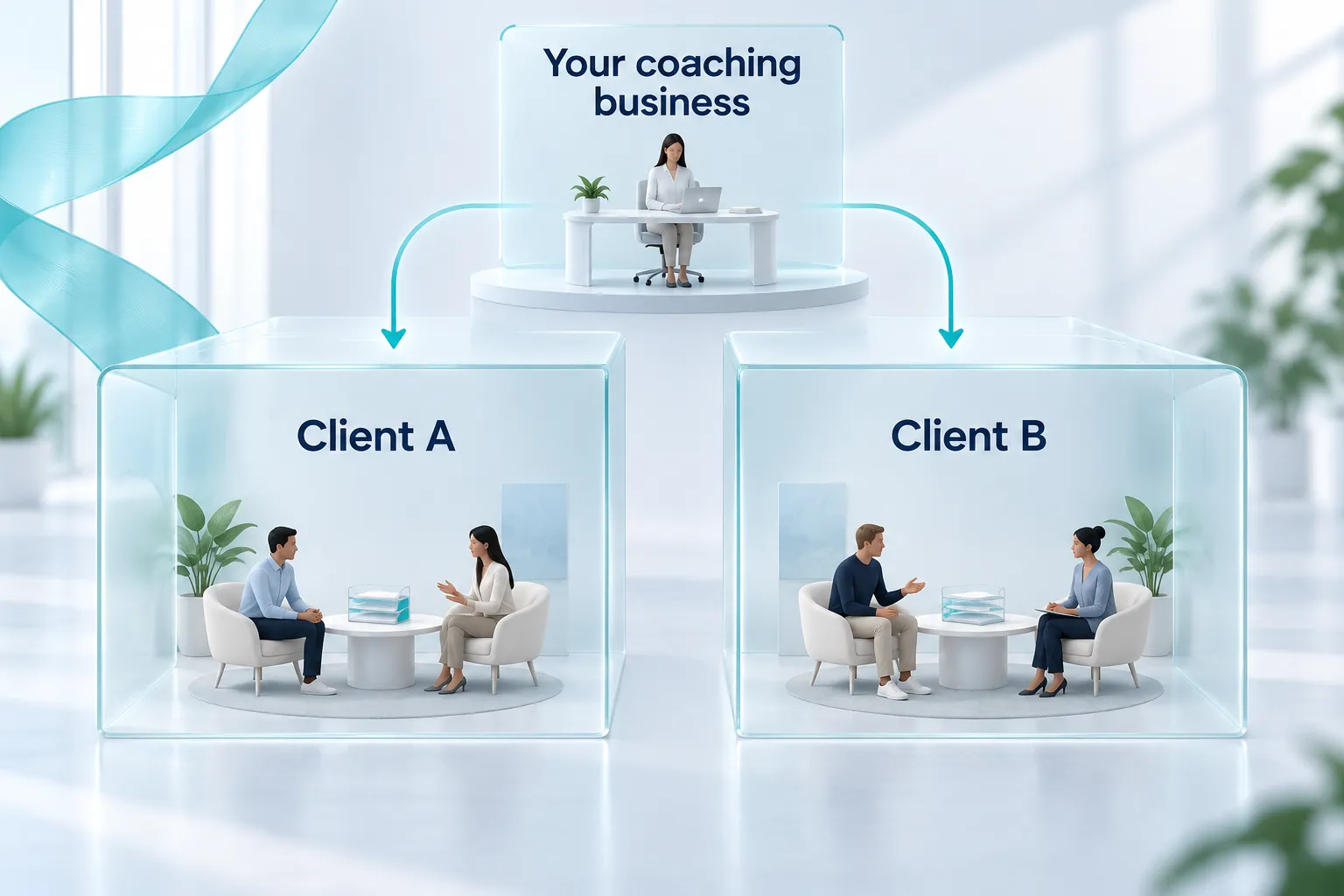
A tool that works for your own team may not fit a coaching business with several clients.
Ask the vendor to demonstrate the view for a learner, a client manager, and your coach. Use two fictional clients. Check that a manager from one cannot see the other’s users, reports, scenarios, or shared links. Also check what happens when one of your coaches works across both accounts.
Client separation includes operations as well as privacy:
- Can you reuse your own base scenario while changing the client-specific details?
- Can you update that base without overwriting another client’s version?
- Can each client have a different schedule and reporting contact?
- Can one client end their program without disrupting the others?
- Who handles learner invitations, password problems, and access requests?
Ask which capabilities are included in the proposed plan. Do not assume that a “team” account includes the controls needed to run several client programs.
How will you price and deliver the service?
Decide what the client is buying from you. It could be workshop follow-through, a monthly practice-and-coaching program, or a bespoke training package. Platform access is one part of the delivery cost.
A simple planning formula is:
Delivery cost = platform fees + setup time + ongoing review time + learner support + reporting.
Use your own hourly cost and expected usage. Include time spent turning client context into a scenario and checking the feedback before learners see it.
Consider this illustrative planning example, not a customer result: a coach sells a six-week objection-handling program. The package includes two scenarios, three assigned practice sessions, one group debrief, and a final sponsor report. Additional scenarios or one-to-one reviews are priced separately.
That scope lets the coach estimate effort and gives the buyer a clear promise. “Unlimited AI coaching” sounds attractive, but leaves questions about human support, scenario changes, and usage costs unanswered.
Before signing, model a quiet month, an expected month, and a busy month. Check minimum commitments, unused seats, usage limits, and renewal terms. Make sure your service still works when a client delays a cohort.
What evidence will you promise the client?
Agree on a small set of measures that match the purpose of the program:
- Participation: who completed the assigned practice and who needed help getting started.
- Skill: what changed in the behavior you taught, with examples reviewed by a coach.
- Transfer: whether the learner can use the skill in a fresh scenario or in real work.
Explain the limits too. An AI practice score is not a direct measure of revenue, and more attempts do not automatically mean better performance. If sales results change during the program, other factors may have changed as well.
Show the sponsor a sample report before the pilot. Include the target behavior, starting point, latest evidence, limitations, and next coaching step. This is more useful than promising a return on investment you cannot yet measure.
What are the warning signs during a demo?
Pause the purchase when an important question has no clear answer:
- The vendor only shows its own scenarios and will not test one of yours.
- Feedback gives a number but cannot point to what happened in the conversation.
- Learners can earn a high score by saying the right terms without responding to the buyer.
- A feature you need depends on an uncommitted roadmap item.
- “You own your data” is the whole answer to questions about access, model training, retention, and export.
- The price excludes the administration or reporting your client program needs.
These are reasons to investigate further. Ask for a demonstration or written terms, then decide whether the gap is acceptable for your service.
Turn your buying brief into a small pilot
Before shortlisting tools, write down your service, first learner group, target skill, coach workflow, essential data controls, and delivery budget. Keep it short enough to share with the vendor and your client sponsor.
Then use our AI sales role-play platform buying scorecard to compare the evidence. It includes shared demo tasks, weighted criteria, and a pilot acceptance template.
Once you have chosen a tool, follow getting started with AI roleplay for sales trainers to plan the first program. If you are considering Skylar, the getting started guide for sales trainers explains that next step in the context of our product.