
Step 1
Define the role standard
Agree what a ready rep should be able to do: explain the offer, diagnose customer needs, handle common objections, and set clear next steps.
Rep onboarding
Help new reps move from product knowledge to conversation readiness. AI roleplay gives them realistic practice, scored feedback, and a safer way to build confidence before they carry the number.
The onboarding model is a practice loop: define the role standard, turn it into realistic scenarios, score the attempts, coach the gaps, and give managers readiness evidence.
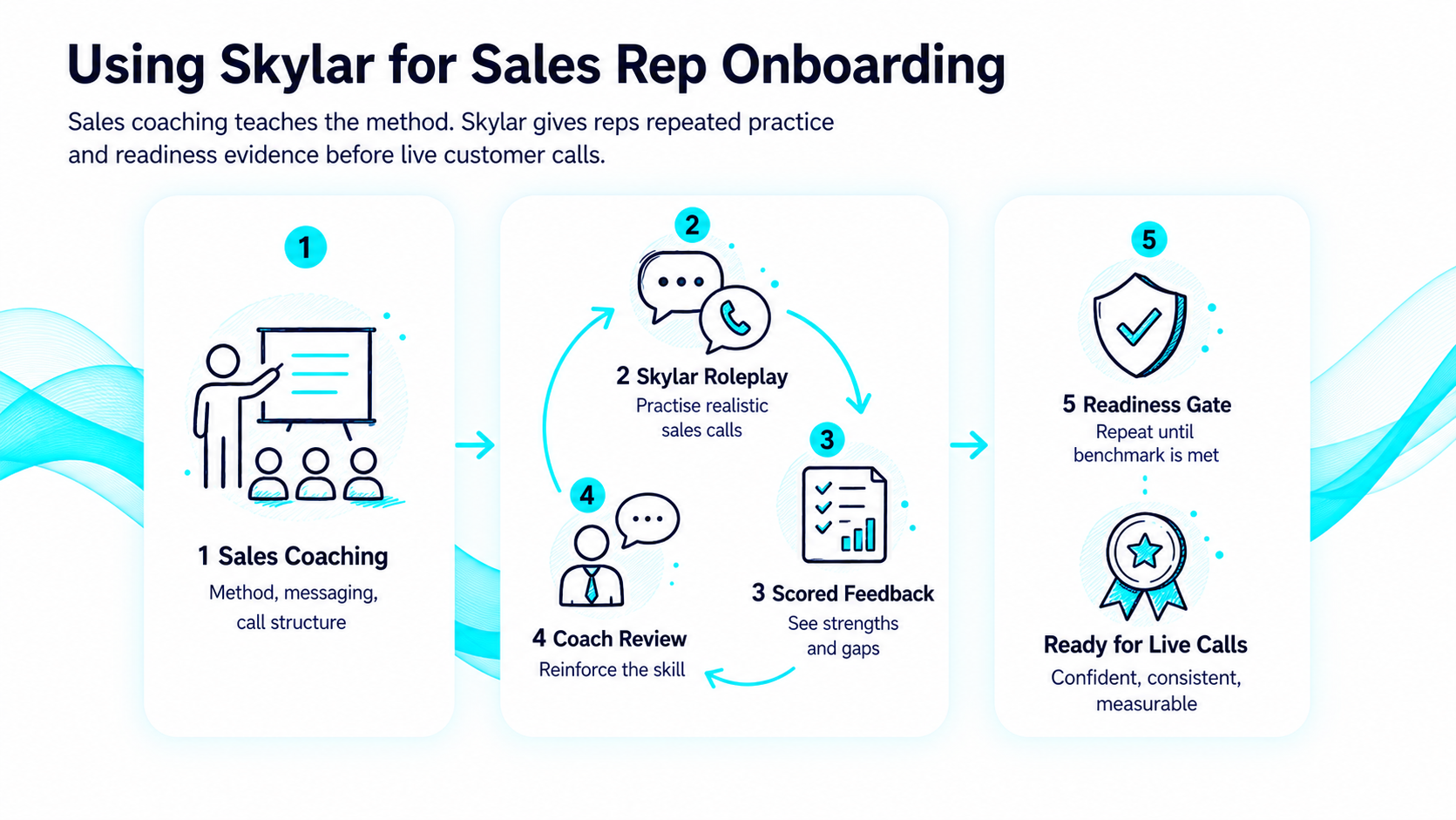
This model is useful for sales coaches who support client onboarding, sales academies, or enablement teams. It turns onboarding from content completion into evidence that a rep can handle the moments they will meet in the field.
Step 1
Agree what a ready rep should be able to do: explain the offer, diagnose customer needs, handle common objections, and set clear next steps.
Step 2
Build realistic practice moments around the conversations new reps will face in their first weeks.
Step 3
Use AI roleplay so reps can repeat high-stakes moments without needing a manager or coach in every session.
Step 4
Give each rep specific feedback on the skills that matter, not just a pass/fail view of completion.
Step 5
Use the data to decide which reps need extra support and which topics need more live coaching time.
Step 6
Give managers a clearer view of who is ready, who is improving, and what to reinforce in the field.
Delivery
The coach still owns the standard, the interpretation, and the human context. AI makes the practice loop more consistent, more available, and easier to report back to the client.
Keep onboarding practice tied to real buyer conversations, not abstract product knowledge.
Start with the few conversations that most affect early confidence and first-month performance.
Use AI feedback to make practice scalable, then use coach judgement to interpret the pattern.
Give managers simple readiness evidence so onboarding does not end the moment training content is complete.
Short answers for coaches adding AI-supported practice to sales rep onboarding.
AI helps new reps practise realistic conversations repeatedly, receive structured feedback, and show readiness evidence before they rely on live customer calls for practice.
No. The strongest model uses AI for repeatable practice and scoring, then uses live coaching time for judgement, context, and the behaviours that need human attention.
Start with the conversations that create the most early risk: opening discovery, explaining value, handling the most common objections, and agreeing a next step.
It gives coaches a stronger onboarding offer because they can support more reps between live sessions and show clients who is becoming field-ready.
Speak with Skylar about adding AI roleplay, scored feedback, and readiness evidence to onboarding programmes.