
Step 1
Baseline the team
Use roleplays and real conversation analysis to show the client where the team stands before coaching begins.
Continuous coaching
Use AI roleplays and real conversation analysis to show where a team started, what changed after training, and which skill gap should shape the next coaching engagement.
This is a follow-on coaching model: baseline the team, coach the priority gap, measure the after state, then use the next gap as the starting point for the next proposal.
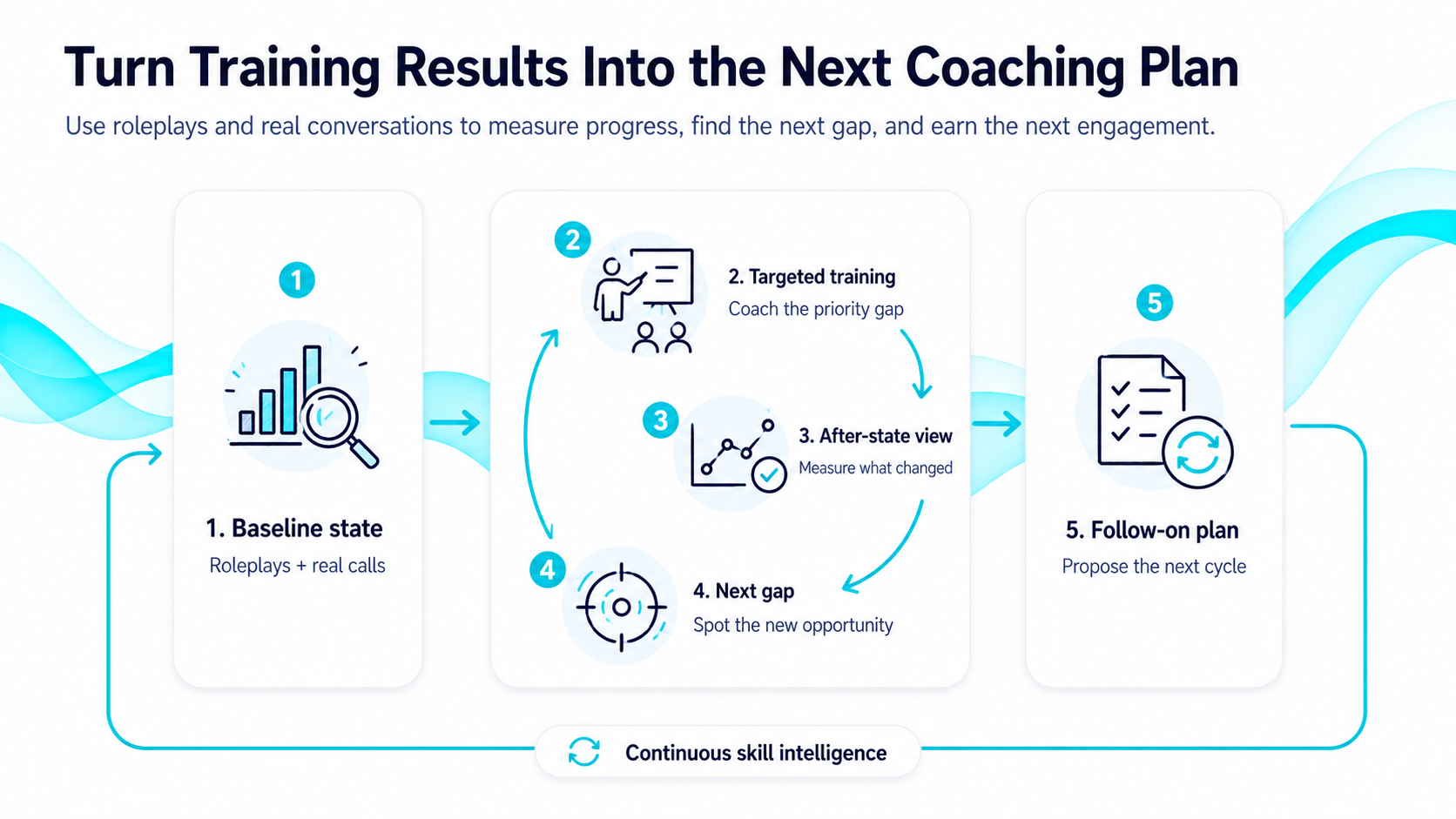
Traditional training often ends with attendance, feedback forms, and a vague hope that the client comes back. This model creates a clearer commercial path. Each programme produces evidence about what improved and what the team should work on next.
Step 1
Use roleplays and real conversation analysis to show the client where the team stands before coaching begins.
Step 2
Focus the programme on the behaviour that matters most right now instead of running a generic training agenda.
Step 3
Compare post-training roleplays and tracked conversations against the baseline so progress is visible.
Step 4
Use the after-state data to identify the next skill gap, team pattern, or coaching priority.
Step 5
Turn the evidence into a client-specific follow-on plan, retainer, or quarterly coaching rhythm.
Commercial model
The coach is not returning with another generic workshop. They are returning with the client's own skill history, field evidence, and a practical recommendation for the next improvement cycle.
Position the first engagement as the start of a measurement loop, not a standalone workshop.
Use roleplays for controlled skill benchmarks and conversation analysis for evidence from the field.
Make the after-state report practical: what improved, what stayed weak, and what should be coached next.
Use the next gap as a constructive planning moment, not as a negative verdict on the team.
The same loop can support a light post-programme offer or a more strategic recurring relationship.
Package a review session where the coach walks the client through improvement, remaining gaps, and recommended next steps.
Run a recurring benchmark and planning session so the client always knows which sales skills need attention next.
Use Skylar data to keep the coaching agenda current across roleplays, real calls, manager feedback, and team progress.
Why clients come back
The value is not only that the coach can prove improvement. It is that the coach now understands the team's journey: what they found hard, what improved through practice, what showed up in real conversations, and where the next coaching investment should go.
Short answers for coaches building an ongoing improvement offer from training data.
The ROI guide is about showing whether a programme worked. This model uses that proof to shape the next commercial conversation and create a reason for follow-on coaching.
Roleplays give a controlled benchmark. Real conversations show what is happening with customers. Together they give the coach a stronger view of skill, behaviour, and field application.
The next proposal starts from client-specific evidence. The coach can show what improved, where the team is now, and which gap is worth solving next.
No. It can start as a post-programme review or quarterly skill review. Over time, the same loop can become a recurring coaching relationship.
Speak with Skylar about roleplay benchmarks, real conversation analysis, and client-ready coaching plans.