
Step 1
Score the baseline
Capture existing conversations and baseline roleplays before training begins so the starting point is visible.
ROI proof
Use Skylar to make training impact measurable. Score the baseline, deliver focused coaching, measure the same skills after training, and show clients the skill uplift.
The ROI model is a before-and-after workflow: capture baseline skill evidence, train against the gaps, then measure the same skills again after the programme.
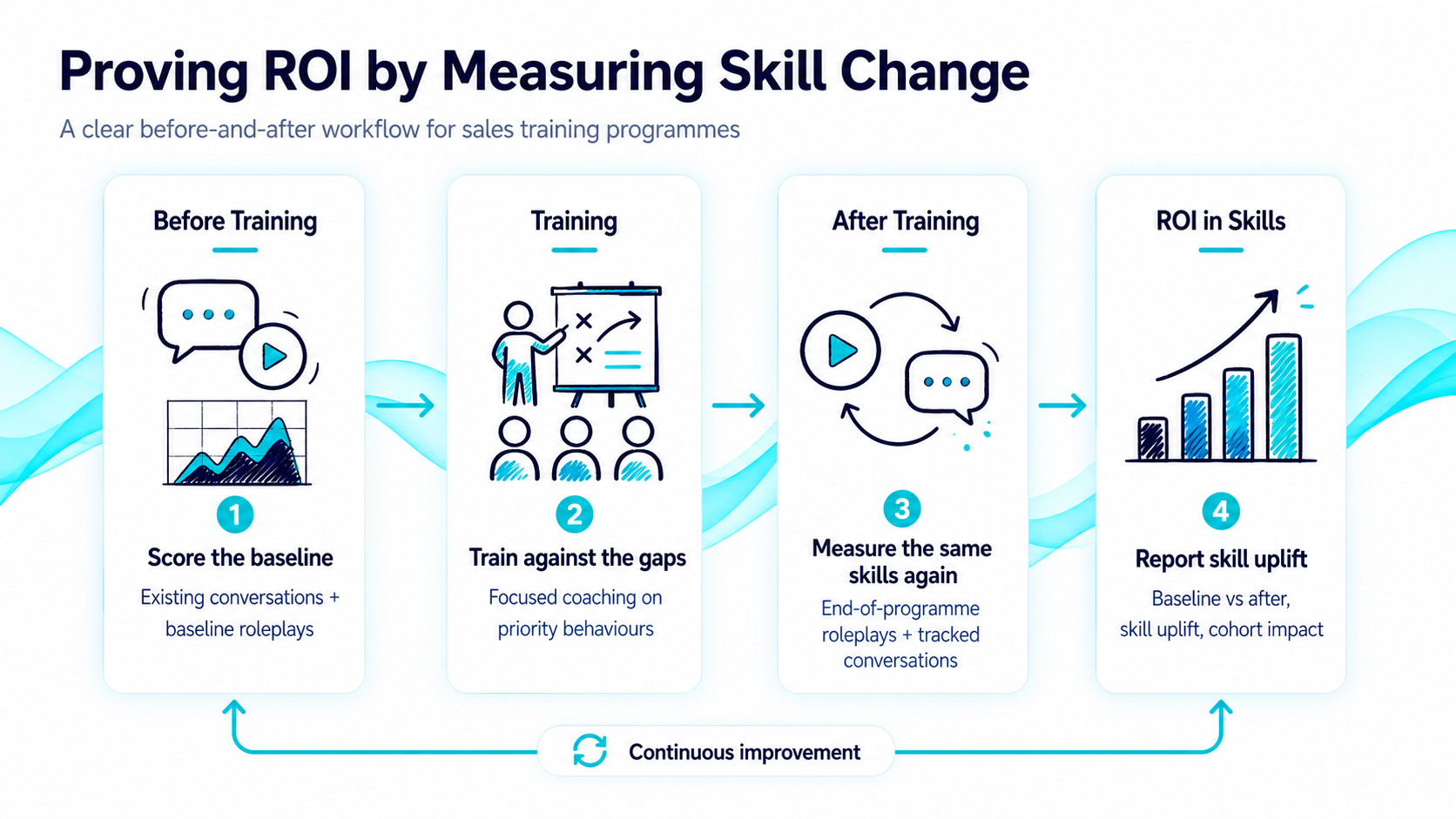
This model helps coaches sell measurable improvement rather than training attendance. The client sees what changed, where the cohort improved, and what should happen next.
Step 1
Capture existing conversations and baseline roleplays before training begins so the starting point is visible.
Step 2
Use the baseline data to focus coaching on the behaviours that need the most improvement, not generic content.
Step 3
Run end-of-programme roleplays and track post-training conversations against the same skill criteria.
Step 4
Show baseline versus after scores, cohort impact, and the specific skill changes created by the programme.
Measurement
The output should not be a generic completion report. It should show baseline versus after, skill uplift, and the next coaching priorities.
Define the skill rubric before the programme starts so the before and after scores are comparable.
Use both real conversations and roleplays when possible: conversations show field reality, roleplays create a controlled benchmark.
Train on the biggest gaps instead of presenting the same curriculum to every cohort.
Turn the after scores into a renewal conversation by showing what improved and what should be coached next.
Short answers for coaches who want ROI proof inside their delivery model.
Baseline scoring gives the client a clear starting point. Without it, improvement is easy to claim but hard to prove.
Measure the same commercial behaviours before and after training: discovery, objection handling, value articulation, next steps, and any client-specific skills that matter.
Roleplays are strongest when they are used as a controlled benchmark alongside real conversation evidence. Together they show whether the learner can perform the skill and whether the behaviour is showing up in the field.
It turns training from an activity report into an impact report. That makes renewals, follow-on programmes, and premium pricing easier to defend.
Speak with Skylar about baseline scoring, post-training measurement, and client-ready skill uplift reporting.